
Best Perianal Abscess Doctor
in Ahmedabad, Gujarat
Painless, safe, and permanent laser solutions by Dr. Saurabh Patel. Get back to your normal life within 24 hours.
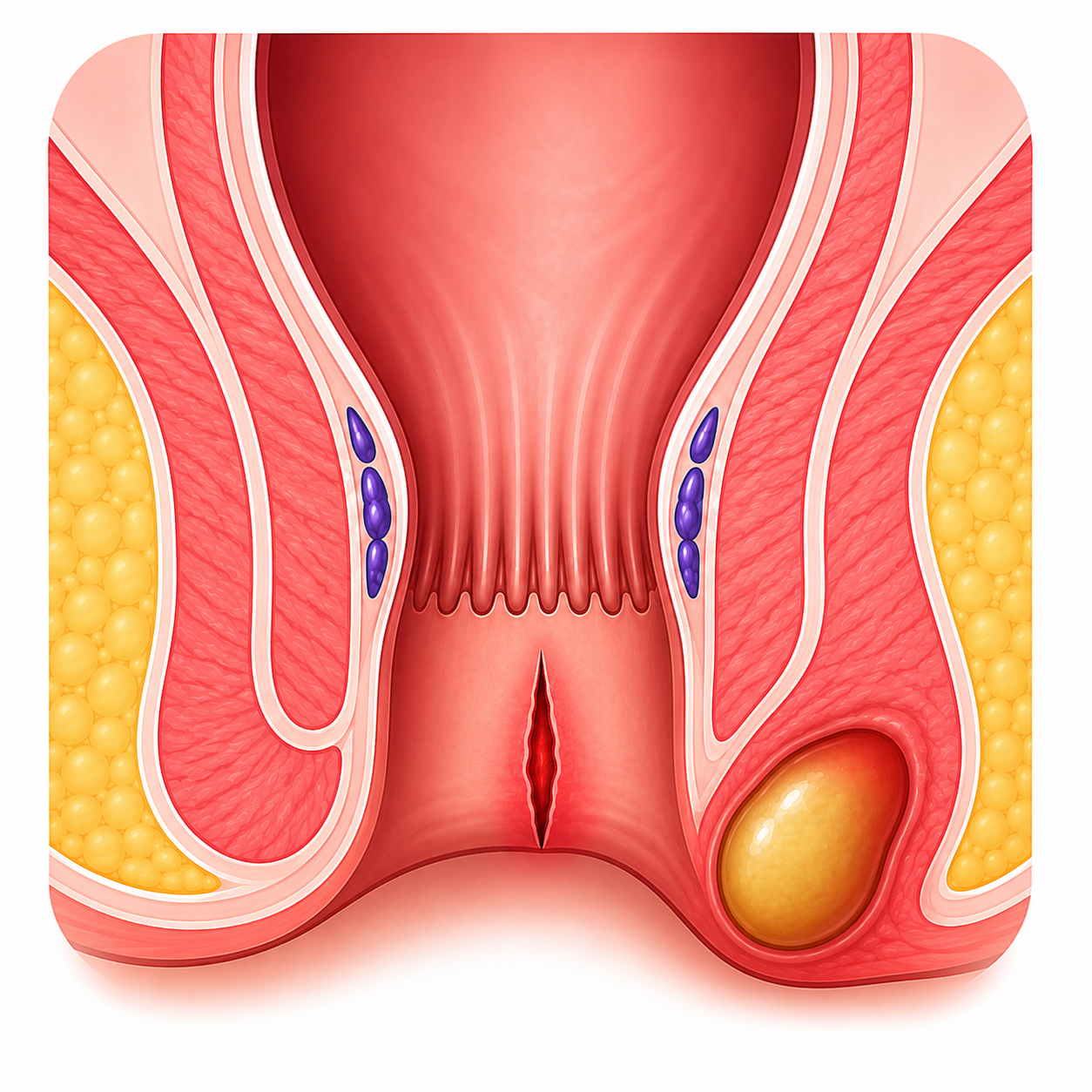
What is Perianal Abscess?
A Perianal Abscess is a painful, pus-filled boil or cavity located near the anus. It occurs when one of the small anal glands becomes blocked and infected by bacteria, forming a localized pool of infection.
This is considered a serious proctological emergency. If not drained promptly, the infection can track deep into surrounding tissues, cause excruciating pain, lead to systemic infection (sepsis), and inevitably lead to the formation of a complex anal fistula.
At Procto Surgical Hospital, we offer immediate, same-day surgical Incision & Drainage (I&D) under highly comfortable anesthesia, relieving pressure and pain instantly while minimizing the risk of fistula formation.
At Procto Surgical Hospital Ahmedabad, Gujarat, we use advanced, US-FDA approved LHP/Laser technology to treat Perianal Abscess without any cuts, bleeding, or pain.
Symptoms of Perianal Abscess
Throbbing Pain
Constant, deep, throbbing pain in the anal area that worsens dramatically when sitting, walking, coughing, or passing stool.
Swelling & Redness
A tender, warm, red, extremely painful lump or boil near the anal opening that feels soft or fluctuant.
High Fever & Chills
Systemic fever, chills, fatigue, and general malaise due to active bacterial infection in the body.
What Causes Perianal Abscess?
Blocked Anal Gland
Anal crypt glands get clogged with feces, dirt, or bacteria, creating a perfect breeding ground for infection.
Infected Anal Fissure
An untreated, deep anal fissure becomes infected, allowing bacteria to penetrate the deep muscular space.
Sexually Transmitted Infections
Infections transmitted through unprotected receptive anal intercourse can cause local abscesses.
Crohn's Disease
Inflammatory bowel diseases lead to deep mucosal ulcers that penetrate the tissue wall, forming abscesses.
Immunosuppression
Patients with uncontrolled diabetes, undergoing chemotherapy, or on immunosuppressants have low defense.
Foreign Body Injury
Swallowed sharp chicken bones, fish bones, or seeds puncturing the anal mucosa from inside.
Severity Stages of Perianal Abscess
Early intervention prevents severe complications. Learn how this condition progresses.
Crypt Infection
Bacteria colonize a blocked anal gland at the dentate line. Symptoms are mild: slight ache or discomfort.
Cellulitis Spread
Infection breaches the gland wall, spreading into the surrounding fat-filled perianal space. Redness and swelling appear.
Abscess Formation
Body confines the infection, forming a painful, swollen, throbbing boil filled with pus. Sitting becomes impossible.
Spontaneous Rupture
If undrained, it bursts through the skin or rectal wall, relieving pressure but leaving a high risk of fistula.
Laser vs. Traditional Surgery for Perianal Abscess
| Feature | Advanced Laser Treatment | Traditional Surgery |
|---|---|---|
| Treatment Necessity | Immediate Surgical Drainage (I&D) | Waiting for spontaneous rupture |
| Pain Relief | Instant (Once pressure is released) | Agonizing pain until tissue ruptures |
| Tissue Damage | Minimal (Controlled surgical incision) | Severe (Pus dissolves surrounding fat/muscles) |
| Fistula Risk | Minimized (Tract cleaned & washed) | Very high (Irregular tissue tract forms) |
| Systemic Sepsis Risk | Prevented (Infection cleared safely) | High (Pus can enter blood stream) |
| Post-op Dressing | Simple clean dressings | Large painful cavity packing |
Why Choose Procto Surgical Hospital?
Recovery Timeline
Day 1: Procedure
Walk back home the same evening.
Day 2: Normal Activity
Resume normal light desk work.
Day 10: Near Zero Pain
Back to your full fitness routine.
Diet & Lifestyle Guidelines
Small changes in your daily routine can prevent recurrence and support fast healing.
Recommended Diet & Tips
Follow emergency instructions: Do not consume food or water if scheduled for anesthesia drainage.
Take prescribed antibiotics and painkillers strictly on time without skipping.
Eat a highly digestible, soft, fiber-rich diet to ensure easy, strain-free bowel movements.
Keep the dressing area clean; wash gently with warm water, avoid using toilet paper.
Sit on a soft foam cushion or air ring to avoid direct pressure on the surgical site.
Seek emergency medical help if you experience a high fever (>101°F) or difficulty passing urine.