
Best Anal Fistula Doctor
in Ahmedabad, Gujarat
Painless, safe, and permanent laser solutions by Dr. Saurabh Patel. Get back to your normal life within 24 hours.
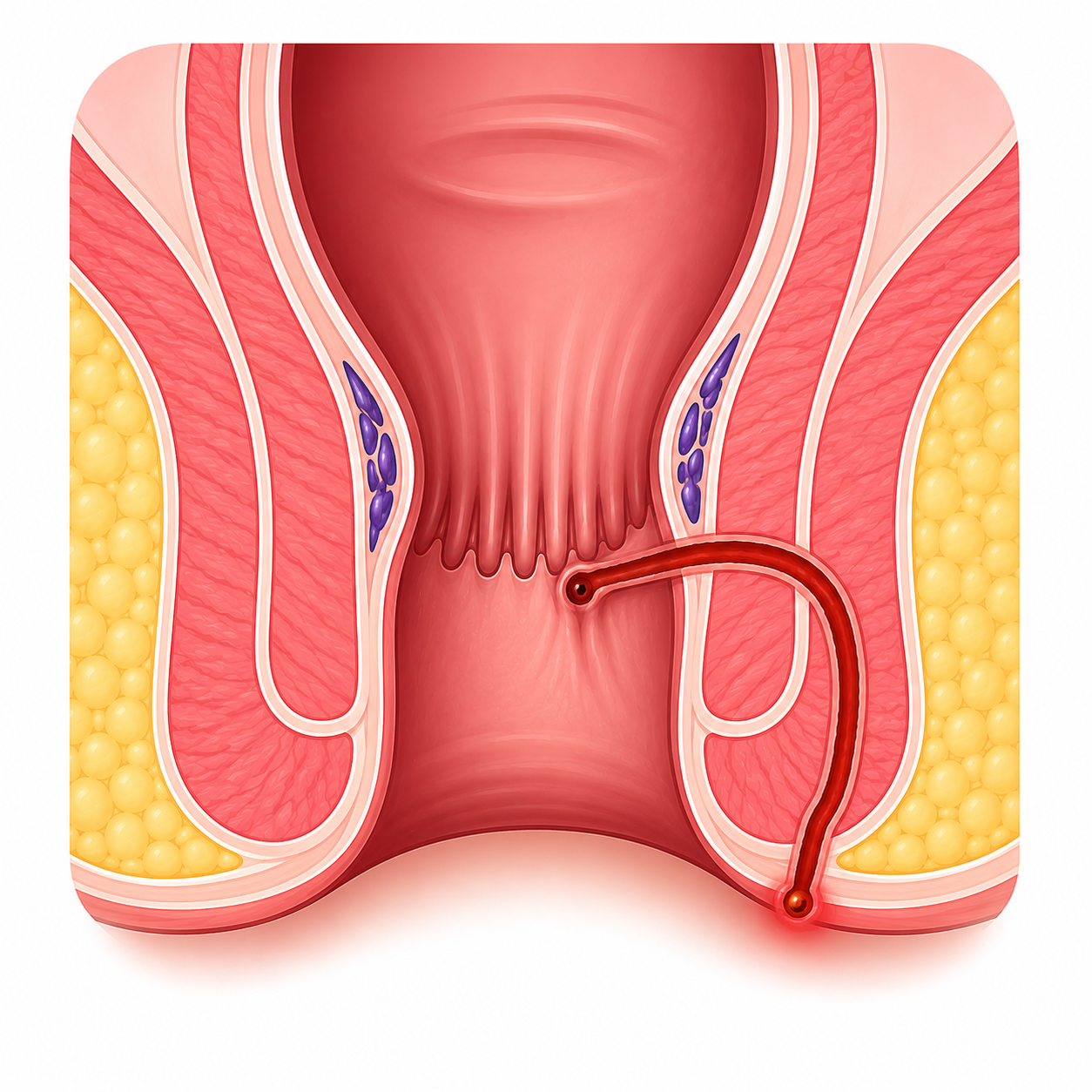
What is Anal Fistula?
An Anal Fistula is an infected tunnel or tract that connects an infected gland inside your anal canal to an opening on the skin outside the anus. It is a deeply frustrating and embarrassing condition, constantly leaking foul-smelling pus or blood and causing severe discomfort during daily activities.
Living with a fistula can shatter your confidence. The constant fear of soilage, the throbbing pain of recurrent boils, and the endless cycles of antibiotics that never seem to provide a permanent cure can leave patients feeling hopeless. The longer a fistula is ignored, the more complex its branches become.
But there is hope. At Procto Surgical Hospital, we utilize the revolutionary FiLAC (Fistula-tract Laser Closure) technique. This highly advanced, US-FDA approved procedure seals the tunnel from the inside out using laser energy, offering a permanent cure without touching your vital sphincter muscles.
At Procto Surgical Hospital Ahmedabad, Gujarat, we use advanced, US-FDA approved LHP/Laser technology to treat Anal Fistula without any cuts, bleeding, or pain.
Symptoms of Anal Fistula
Foul Discharge
Constant or intermittent draining of foul-smelling pus or blood from a small opening near the anus, causing irritation and soilage.
Recurrent Abscesses
Frequent, painful swelling or boils near the anus that burst, drain, and eventually return if left untreated.
Throbbing Pain
Deep, throbbing pain in the anal region that worsens dramatically when sitting down, coughing, or having a bowel movement.
What Causes Anal Fistula?
Clogged Anal Glands
Over 90% of fistulas originate from an infection in an anal gland that develops into an abscess, which then forms a tunnel to drain.
Unresolved Perianal Abscess
If an abscess is not drained properly or fails to heal completely, a persistent fistula tract naturally forms.
Crohn's, HIV, TB Disease
Chronic inflammatory bowel conditions like Crohn’s disease, HIV, or Tuberculosis can cause persistent inflammation and abscesses in the anal region.
Anorectal Trauma
Injuries from accidents, foreign bodies, or previous surgeries can damage the anal canal and initiate a tract.
Infected Anal Fissure
If a simple tear (fissure) in the anal lining becomes chronically infected or fails to heal, it can deepen and develop into a fistula tract.
Radiation Therapy
Cancer treatments targeting the prostate, cervix, or rectum can weaken and damage pelvic tissues, forming fistulas.
Severity Stages of Anal Fistula
Early intervention prevents severe complications. Learn how this condition progresses.
Intersphincteric
The tract is confined between the internal and external sphincter muscles. Easiest to treat, represents 70% of cases.
Transsphincteric
The tract crosses both the internal and external sphincter muscles, requiring highly precise closure to avoid muscle damage.
Suprasphincteric
The tract loops up over the sphincter apparatus and runs downwards to exit the perianal skin. Highly complex.
Extrasphincteric
The tract runs directly from the rectum, completely bypassing the sphincter apparatus. Extremely rare and complex.
Laser vs. Traditional Surgery for Anal Fistula
| Feature | Advanced Laser Treatment | Traditional Surgery |
|---|---|---|
| Sphincter Preservation | 100% Preserved (Laser acts inside tract) | Muscle cut open (High risk of damage) |
| Bowel Control (Leakage) | Zero risk of fecal incontinence | Significant risk of fecal/gas incontinence |
| Wound Size | Tiny microscopic entry point | Large, deep, disfiguring open wound |
| Daily Dressings | No dressings or painful packing required | Agonizing daily packing for 2-3 months |
| Recovery Duration | Return to work in 3 to 5 days | 6 to 8 weeks of painful recovery |
| Recurrence Rate | Very Low when sealed with radial laser | High recurrence if complex tracts are missed |
Why Choose Procto Surgical Hospital?
Recovery Timeline
Day 1: Procedure
Walk back home the same evening.
Day 2: Normal Activity
Resume normal light desk work.
Day 10: Near Zero Pain
Back to your full fitness routine.
Diet & Lifestyle Guidelines
Small changes in your daily routine can prevent recurrence and support fast healing.
Recommended Diet & Tips
Eat fiber-rich meals to avoid constipation, which can tear the healing tract.
Drink plenty of water and clear broths to support gut motility and bowel softness.
Keep the perianal skin completely clean and dry to prevent bacterial build-up.
Wear breathable, loose-fitting cotton undergarments to allow air circulation.
Avoid sitting on hard surfaces for long intervals; use a specialized cushion.
If you notice minor pinkish spotting, use a light panty liner or pad for hygiene.