
Best Anal Fissure Doctor
in Ahmedabad, Gujarat
Painless, safe, and permanent laser solutions by Dr. Saurabh Patel. Get back to your normal life within 24 hours.
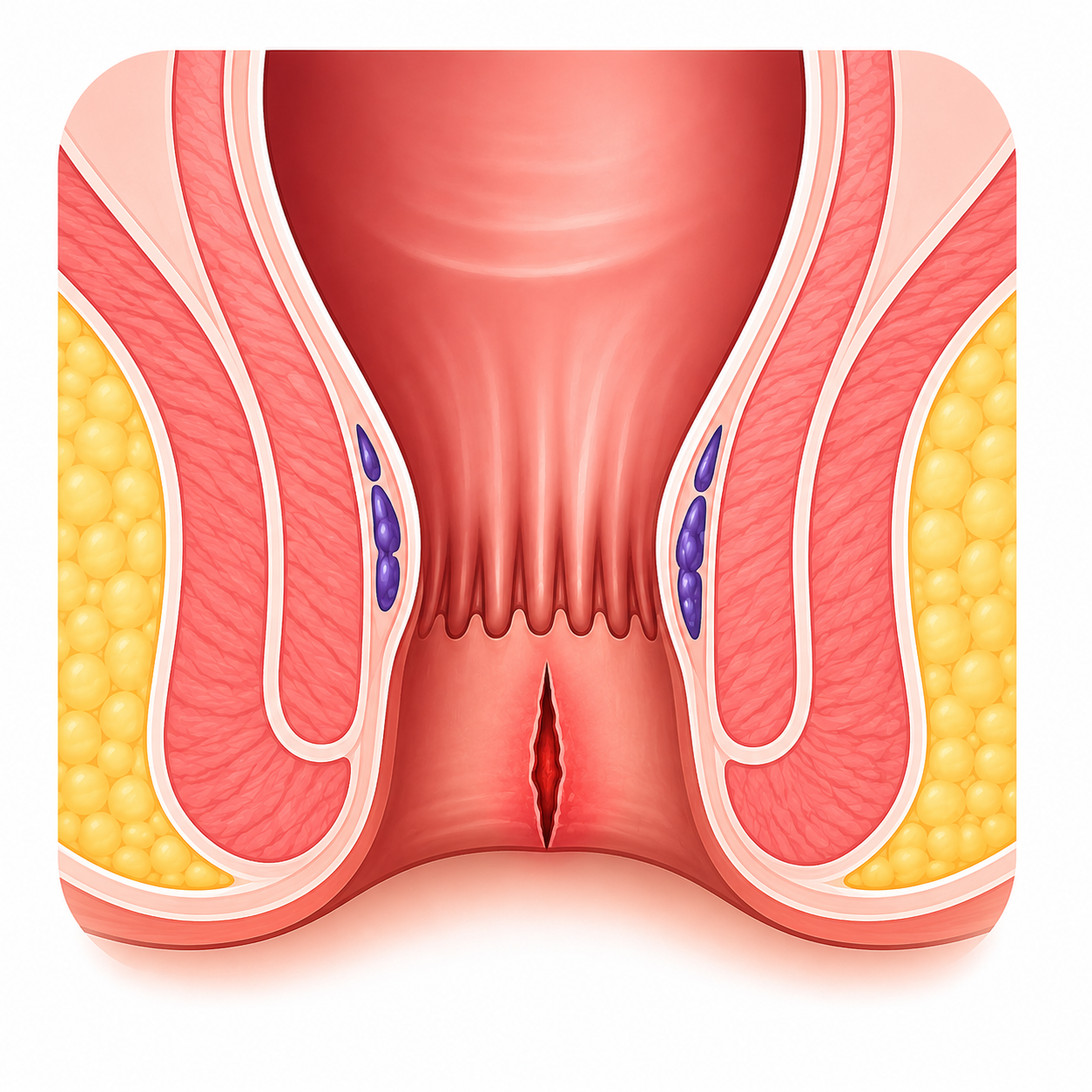
What is Anal Fissure?
An Anal Fissure is a small tear or cut in the delicate tissue lining the lower rectum and anus. The intense, sharp pain it causes during and after bowel movements is often described as feeling like 'passing glass'. The fear of this agonizing pain can make patients dread going to the bathroom, leading to a vicious cycle of constipation and further tearing.
When a fissure becomes chronic, the underlying sphincter muscle goes into continuous spasms. This cuts off blood supply to the tear, making natural healing nearly impossible without medical intervention.
You do not have to endure this excruciating pain. At Procto Surgical Hospital, we offer advanced laser sphincterotomy that gently relaxes the muscle spasm instantly, providing immediate pain relief and allowing the fissure to heal rapidly.
At Procto Surgical Hospital Ahmedabad, Gujarat, we use advanced, US-FDA approved LHP/Laser technology to treat Anal Fissure without any cuts, bleeding, or pain.
Symptoms of Anal Fissure
Excruciating Pain
Severe, sharp, tearing pain during and immediately after bowel movements, sometimes lasting for several hours.
Fresh Bleeding
A few drops of bright red blood on the stool or toilet paper. Unlike piles, bleeding is usually accompanied by intense pain.
Muscle Spasms
Painful, uncontrollable spasms in the anal sphincter ring that make sitting or relaxing difficult.
What Causes Anal Fissure?
Passing Large/Hard Stools
Forcing bulky or dehydrated stool through the delicate anal opening causes mechanical stretching and tearing.
Chronic Constipation
Continuous strain and dryness associated with constipation repeatedly stress and crack the mucosal lining.
Hyperactive Anal Sphincter
Excessive resting pressure or spasms in the internal anal sphincter make the canal tight and prone to cracking.
Childbirth & Delivery
Severe pushing during normal vaginal delivery can tear the posterior or anterior midline of the anal mucosa.
Inflammatory Bowel Disease (IBD)
Conditions like Crohn's disease or ulcerative colitis cause chronic inflammation of the anorectal tract.
Anal Intercourse
Unprotected or unlubricated anal intercourse can stretch and tear the delicate anal lining.
Severity Stages of Anal Fissure
Early intervention prevents severe complications. Learn how this condition progresses.
Acute Fissure
A fresh, superficial tear in the lining resembling a paper cut. Usually heals within 6 weeks using conservative management.
Chronic Fissure
Tear persists beyond 6 weeks. Becomes deep, exposing muscle fibers, and has raised edges.
Fissure with Sentinel Tag
A skin tag forms at the lower end of the tear due to chronic swelling, often signaling a long-standing issue.
Fissure with Hypertrophied Papilla
A polyp-like growth forms at the upper end of the tear inside the canal as a defense mechanism.
Laser vs. Traditional Surgery for Anal Fissure
| Feature | Advanced Laser Treatment | Traditional Surgery |
|---|---|---|
| Pain Relief | Instant relief (Relaxation of spasm) | Pain persists for 7 to 10 days |
| Stitches & Wounds | No incisions, no stitches | Surgical cuts and painful sutures |
| Hospital Stay | Daycare (Discharge in 2-3 hours)* | 1 to 2 days of hospitalization |
| Recovery Time | Resume work in 24 to 48 hours | 2 weeks of healing & dressing |
| Incontinence Risk | Zero risk (High laser precision) | Slight risk if sphincter is cut too deeply |
| Recurrence Rate | Less than 1% | 5% to 7% |
Why Choose Procto Surgical Hospital?
Recovery Timeline
Day 1: Procedure
Walk back home the same evening.
Day 2: Normal Activity
Resume normal light desk work.
Day 10: Near Zero Pain
Back to your full fitness routine.
Diet & Lifestyle Guidelines
Small changes in your daily routine can prevent recurrence and support fast healing.
Recommended Diet & Tips
Soak in a warm Sitz bath for 10-15 minutes, 2-3 times daily to relax the sphincter.
Drink warm liquids, herbal tea, or warm milk at night to soothe bowel movements.
Eat fiber-rich foods like whole grains, carrots, cucumbers, and green vegetables.
Avoid eating hard nuts, seeds, and extremely dry roasted snacks that can scratch the canal.
Do not delay the urge to pass stool; delay makes stools harder and drier.
Avoid sitting on hard surfaces for long hours; use a soft cushion or donut pillow if needed.