
Best Hernia Doctor
in Ahmedabad, Gujarat
Painless, safe, and permanent laser solutions by Dr. Saurabh Patel. Get back to your normal life within 24 hours.
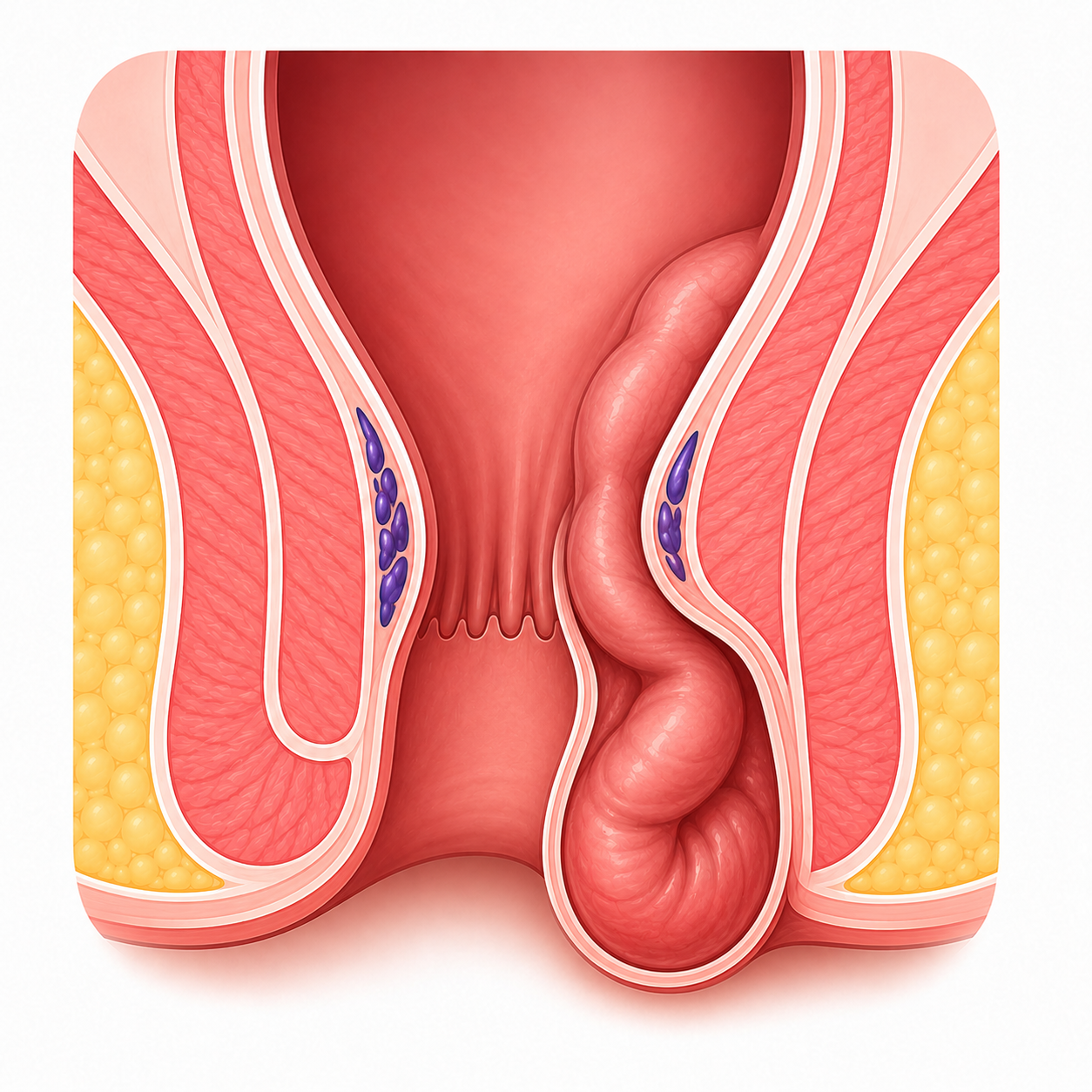
What is Hernia?
A Hernia occurs when an internal organ, such as part of the intestine, pushes through a weak spot in the surrounding muscle or tissue wall. Hernias often appear as a bulge under the skin and can cause discomfort, dull aches, and severe functional problems.
Hernias do not heal on their own and will gradually grow larger and more painful over time. If left untreated, they carry a high risk of 'strangulation'—where a section of the intestine is trapped and its blood supply is cut off, which is a life-threatening emergency.
At Procto Surgical Hospital, we specialize in high-precision, tension-free Laparoscopic Hernioplasty using advanced anatomical 3D Mesh. This keyhole approach guarantees minimal pain, almost no scarring, and immediate return to normal life.
At Procto Surgical Hospital Ahmedabad, Gujarat, we use advanced, US-FDA approved LHP/Laser technology to treat Hernia without any cuts, bleeding, or pain.
Symptoms of Hernia
Visible Bulge
A visible bulge or swelling under the skin in the groin or abdomen that becomes prominent when standing, coughing, or lifting, and disappears when lying flat.
Groin/Abdomen Pain
A sharp pain or burning ache in the affected area, especially during physical exertion, bending down, or carrying heavy objects.
Sensation of Heaviness
A dragging, heavy, or pulling feeling in the groin or lower abdomen, typically worsening towards the end of the day.
What Causes Hernia?
Abdominal Wall Weakness
Congenital defects or age-related degeneration that weakens the natural fibrous layers of the abdominal wall.
Heavy Weight Lifting, Coughing
Moving heavy items, chronic coughing, or straining during bowel movements or urination increases pressure on the abdominal wall.
Previous Surgical Scars
Weakening of abdominal wall muscles along the scar line of a previous surgery (causing Incisional Hernia).
Obesity & Pregnancy
Excess body weight or expanding uterus stretches, thins, and weakens the abdominal muscle sheets.
Congenital Weakness
Born with an area of weakness in the abdominal muscle
Straining
Straining during bowel movements or urination increases pressure on the abdominal wall.
Severity Stages of Hernia
Early intervention prevents severe complications. Learn how this condition progresses.
First Stage (Reducible)
The hernia is small and the protruding tissue easily slides back into the abdomen manually or when lying down.
Second Stage (Incarcerated)
The tissue becomes physically trapped in the muscle wall and cannot be pushed back. Pain increases.
Third Stage (Obstructed)
The trapped loop of bowel is blocked, stopping stool and gas flow. Causes severe bloating, pain, and vomiting.
Fourth Stage (Strangulated)
Blood supply to the trapped tissue is completely cut off. Tissue necrosis sets in. Emergency surgery is required.
Types of Hernia We Treat
Different types of hernias develop based on their location on the abdominal wall or groin.
Inguinal Hernia
The most common type, representing 75% of hernias. Part of the intestine pushes through the inguinal canal in the groin, mostly in men.
Umbilical Hernia
Occurs when abdominal fat or bowel pushes through a weak spot near the belly button. Common in women after pregnancy and infants.
Femoral Hernia
Protrusion occurs in the femoral canal just below the groin crease. Highly common in older women and carries a very high risk of strangulation.
Incisional Hernia
Develops through a weak scar from a previous abdominal surgical cut due to poor healing or wound infection.
Epigastric Hernia
Fatty tissue pushes through the abdominal wall between the breastbone and the belly button, causing localized discomfort.
Hiatal Hernia
The upper stomach pushes upward into the chest cavity through the esophageal opening in the diaphragm, causing severe acid reflux (GERD).
Grades of Hernia
Understanding the clinical grade of your hernia helps determine the urgency of surgical repair.
Grade 1: Reducible
The hernia bulge appears when standing or straining but easily slides back into the abdominal cavity on its own or when gently pressed while lying down.
Grade 2: Irreducible / Incarcerated
The protruding organ gets physically trapped in the muscular gap and cannot be pushed back inside. The bulge is constantly present and causes a persistent dull ache.
Grade 3: Obstructed
A section of the intestine is trapped so tightly that stool and digestive gas cannot pass through. Leads to severe abdominal cramps, bloating, nausea, and vomiting.
Grade 4: Strangulated
The blood supply to the trapped tissue is completely choked off. This leads to rapid tissue necrosis (gangrene) and infection. Requires immediate emergency surgery within hours.
Laser vs. Traditional Surgery for Hernia
| Feature | Advanced Laser Treatment | Traditional Surgery |
|---|---|---|
| Surgical Approach | Laparoscopic Hernia Repair (Keyhole) | Open Hernia Surgery |
| Incision & Scars | 3 tiny 5mm keyholes (Invisible scars) | 1 large 8-10cm abdominal incision |
| Mesh Placement | Tension-free Anatomical 3D Mesh | Flat mesh stitched to tissue |
| Hospital Stay | Daycare or 1 day stay | 2 to 3 days of hospitalization |
| Recovery Duration | Resume desk work in 3 to 5 days | 3 to 4 weeks of strict bed rest |
| Recurrence Rate | Extremely Low (<1% with 3D mesh) | Slightly higher (3% to 4%) |
Why Choose Procto Surgical Hospital?
Recovery Timeline
Day 1: Procedure
Walk back home the same evening.
Day 2: Normal Activity
Resume normal light desk work.
Day 10: Near Zero Pain
Back to your full fitness routine.
Diet & Lifestyle Guidelines
Small changes in your daily routine can prevent recurrence and support fast healing.
Recommended Diet & Tips
Avoid chronic constipation completely by consuming fiber supplements and drinking 3-4L water.
Do not lift anything heavier than 5kg for at least 4 to 6 weeks post-surgery.
Support the surgical site with your hand or a pillow when coughing, sneezing, or laughing.
Avoid smoking completely, as chronic coughing can tear the healing muscle layers or displace the mesh.
Do not engage in heavy core workouts, abdominal crunches, or heavy running until cleared by the doctor.
Wear a supportive abdominal binder or hernia brief if specifically recommended by the surgeon.