
Best Hypertrophied Anal Papilla Doctor
in Ahmedabad, Gujarat
Painless, safe, and permanent laser solutions by Dr. Saurabh Patel. Get back to your normal life within 24 hours.
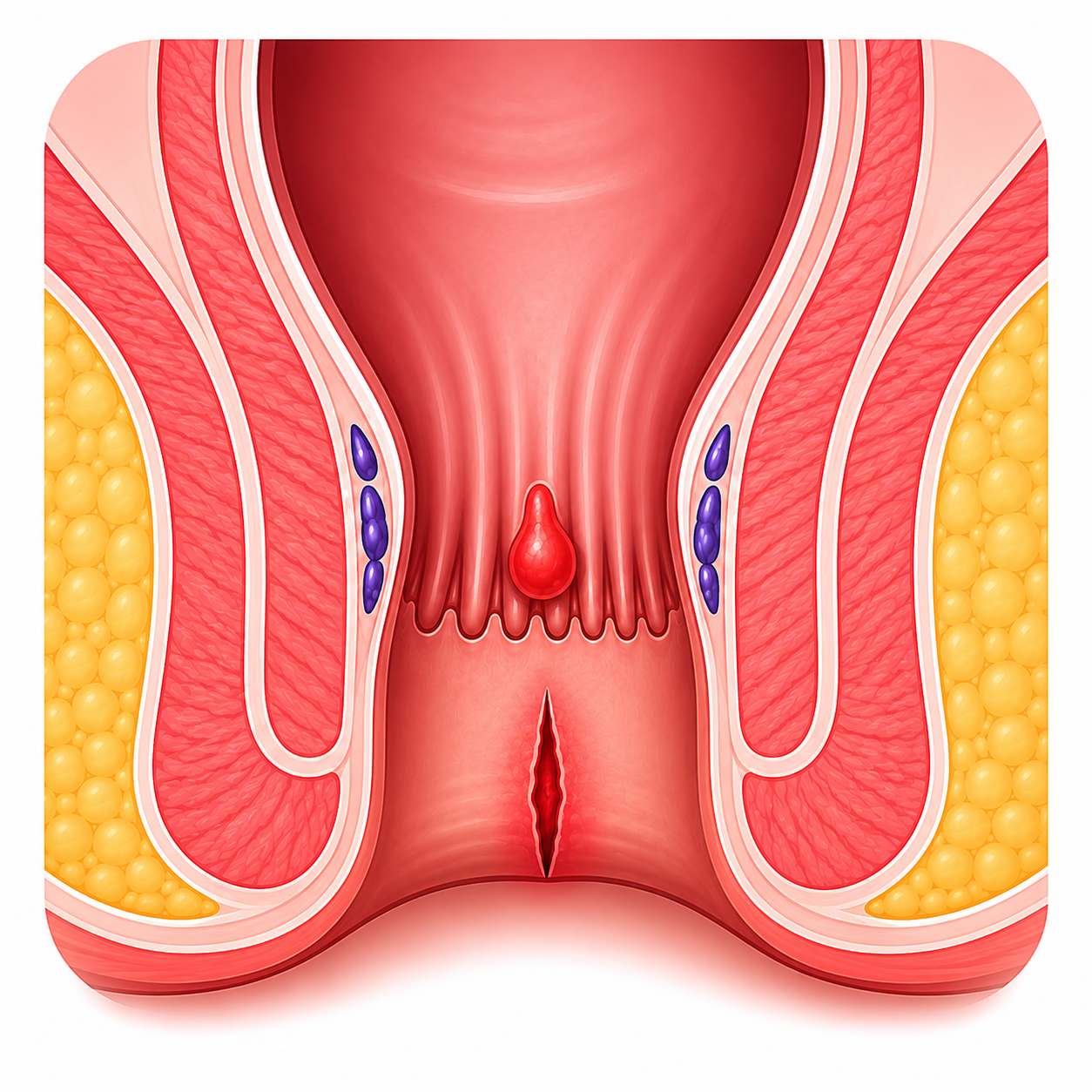
What is Hypertrophied Anal Papilla?
Hypertrophied Anal Papillae are benign, enlarged skin tags or fibrous growths inside the anal canal. They are often a result of chronic irritation or inflammation, frequently associated with chronic anal fissures or long-standing piles.
While they are completely harmless and non-cancerous, they can grow large enough to prolapse outside the anus during bowel movements, causing persistent physical discomfort, intense itching, and a distressing sensation of incomplete evacuation.
At Procto Surgical Hospital, we offer advanced, painless laser ablation and high-precision Radiofrequency (RF) excision to safely vaporize these growths in under 15 minutes, allowing you to walk home immediately and pain-free.
At Procto Surgical Hospital Ahmedabad, Gujarat, we use advanced, US-FDA approved LHP/Laser technology to treat Hypertrophied Anal Papilla without any cuts, bleeding, or pain.
Symptoms of Hypertrophied Anal Papilla
Feeling of a Lump
A firm, painless, polyp-like lump that protrudes from the anus during bowel movements and needs to be pushed back.
Pruritus Ani (Itching)
Intense itching, burning, and soreness around the anal region due to excess mucus secretion by the irritated papilla.
Incomplete Evacuation
A persistent feeling that a foreign object is stuck in the anal canal or that the bowel hasn't emptied completely.
What Causes Hypertrophied Anal Papilla?
Chronic Anal Fissures
The persistent inflammation of a chronic tear causes a sentinel skin tag at the bottom and a hypertrophied papilla at the top.
Chronic Diarrhea
Frequent, watery bowel movements irritate the delicate crypts and papillae along the dentate line.
Persistent Straining
Severe straining during constipation increases mechanical friction in the anal canal, triggering tissue hypertrophy.
Cryptitis (Crypt Infection)
Local bacterial infection of the anal crypts leads to inflammatory swelling of adjacent papillae.
Anal Sphincter Spasms
High resting pressure in the sphincter muscle causes chronic congestion and localized tissue overgrowth.
Chronic Inflammation
Long-term inflammatory conditions in the rectoanal region, such as inflammatory bowel disease (IBD), can contribute to papilla enlargement.
Severity Stages of Hypertrophied Anal Papilla
Early intervention prevents severe complications. Learn how this condition progresses.
Normal Papilla
Tiny, microscopic mucosal projections along the dentate line that help sense bowel contents. Completely painless.
Hypertrophied Papilla
Chronic irritation causes the papilla to grow up to 1-2 cm. It remains inside the canal but causes itching.
Prolapsing Papilla
The papilla elongates and slides outside the anus during defecation, necessitating manual reduction.
Giant Fibrous Papilla
Grows into a large, dense fibrous skin mass (up to 3-4 cm) resembling an anal polyp, causing pain.
Laser vs. Traditional Surgery for Hypertrophied Anal Papilla
| Feature | Advanced Laser Treatment | Traditional Surgery |
|---|---|---|
| Excision Precision | Laser/RF (Micron precision, vaporizes base) | Scalpel cut (Crude excision) |
| Bleeding | Almost Zero (Laser seals tiny capillaries) | Significant bleeding requiring compression |
| Recovery Duration | Complete healing in 3 to 5 days | 2 to 3 weeks of painful raw wound healing |
| Stitches & Wounds | Zero stitches, microscopic wound | Sutures and large surgical cuts |
| Hospital stay | Outpatient procedure (Leave in 1 hour) | 1 day hospital stay required |
| Recurrence Rate | Extremely Rare (<0.5%) | Slight risk if base is not fully excised |
Why Choose Procto Surgical Hospital?
Recovery Timeline
Day 1: Procedure
Walk back home the same evening.
Day 2: Normal Activity
Resume normal light desk work.
Day 10: Near Zero Pain
Back to your full fitness routine.
Diet & Lifestyle Guidelines
Small changes in your daily routine can prevent recurrence and support fast healing.
Recommended Diet & Tips
Consume a high-fiber diet to avoid hard stool friction over the healing area.
Maintain excellent perianal hygiene; pat dry gently, avoid harsh rubbing.
Avoid using scented soaps or wet wipes that contain alcohol or fragrance.
Take a warm water sitz bath for 10 minutes daily to keep the canal relaxed.
Wear loose-fitting, breathable cotton undergarments to minimize local sweating.
Drink plenty of water (3-4L) to prevent stools from compacting and causing straining.